Key Takeaways:
Kubernetes itself isn’t the bottleneck -operational complexity is. Teams need abstraction and standardized workflows to scale.
Multi-cluster environments often grow faster than visibility, increasing reliability and outage risks.
Security misconfigurations remain the most common cause of Kubernetes incidents, making built-in governance essential.
Without cost intelligence, 30–40% of Kubernetes cloud spend is typically wasted.
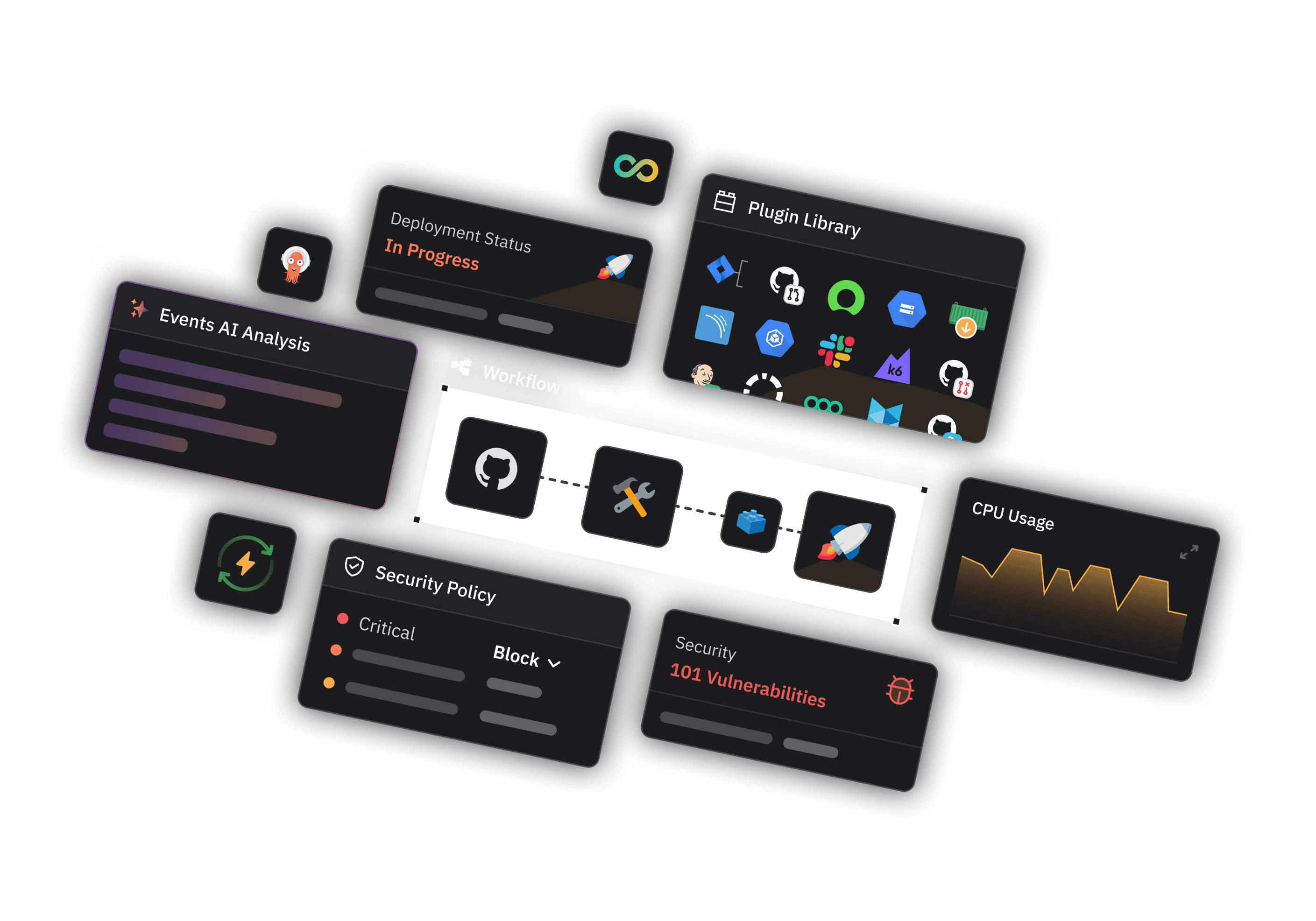
The strongest Kubernetes management platforms in 2026 - like Devtron - bring CI/CD, security, observability, and cost management together in a single Kubernetes-native platform.
Introduction
Kubernetes adoption has crossed the point of no return.
Today, 93% of organizations are already using or actively evaluating Kubernetes, yet nearly 80% of Kubernetes incidents are still caused by operational complexity not infrastructure failures. Kubernetes has proven itself as the foundation of modern cloud-native systems, but running it well at scale remains a challenge.
In 2025, the Kubernetes market is valued at $3.1 billion and is projected to grow to $17 billion by 2033. As clusters, environments, and teams multiply, the operational burden grows right alongside them.
In practice, we see teams spending weeks every year firefighting Kubernetes issues often caused by configuration drift, poor visibility, or unclear ownership. Mean Time to Detect (MTTD) typically sits around 40 minutes, while high-impact outages can take nearly an hour to resolve. For large enterprises, that single hour can cost over $1 million in lost revenue and trust.
The problem isn’t Kubernetes. It’s how Kubernetes is managed.
Tool sprawl, fragmented workflows, security gaps, and hidden cloud costs prevent teams from realizing the speed and reliability Kubernetes promises. In this post, we’ll break down the five most common Kubernetes management challenges and explain how modern platforms including Devtron - are solving them.
1. Overwhelming Complexity and a Steep Learning Curve
The Problem: Too Many Moving Parts
Kubernetes exposes teams to a large surface area: pods, services, deployments, ingress, secrets, CRDs, and more. Most organizations then add 5-10 additional tools, CI systems, GitOps engines, monitoring stacks each with its own configuration model.
We repeatedly see teams where only one or two engineers truly understand the full Kubernetes setup. Everyone else waits in line.
Real-World Impact
54% of organizations report storage and configuration as major Kubernetes challenges
Developers spend weeks learning internals instead of shipping features
DevOps teams become bottlenecks for deployments, rollbacks, and environment changes
How Platforms Solve It: Abstraction and Unified Control
The best platforms don’t hide Kubernetes; they make it usable.
Tools like Portainer reduce reliance on raw YAML through a visual interface, while Rancher centralizes cluster operations across environments.
How Devtron Helps
Form-based configurations with no YAML required
Helm-native deployments with full visual control
Built-in deployment history, logs, and one-click rollbacks
A unified dashboard covering apps and infrastructure
Teams using Devtron often move from “submit a ticket” to self-serve deployments, cutting operational friction dramatically.
2. Multi-Cluster Management and Visibility Gaps
The Problem: Operating Without Context
Most production Kubernetes setups today involve multiple clusters across clouds, regions, and environments. Without a centralized view, teams lose context fast.
When incidents happen, engineers know something is broken - but not where or why.
Real-World Impact
Slower detection and response during incidents
Configuration drift between environments
Higher outage risk due to inconsistent deployments
How Platforms Solve It: A Single Pane of Glass
How Devtron Helps
Centralized multi-cluster and multi-environment management
Application-centric visibility instead of node-level noise
Environment-wise deployment tracking
Unified access to logs, events, and deployment metadata
This shifts troubleshooting from “guess and grep” to clear, application-level insight.
3. Security Misconfigurations and Compliance Risks
The Problem: Security Is Distributed and Easy to Get Wrong
Kubernetes security isn’t one feature; it’s dozens. RBAC, secrets, network policies, image security, and CI/CD all play a role. Most breaches don’t come from zero-days—they come from misconfigurations.
Real-World Impact
60%+ of Kubernetes incidents trace back to misconfigurations
Audits become manual, reactive, and stressful
Increased exposure to compliance and regulatory risks
How Platforms Solve It: Security Built Into the Workflow
How Devtron Helps
Fine-grained RBAC aligned to teams and environments
Secure secrets management with strong isolation
Policy enforcement directly in CI/CD pipelines
Detailed audit logs for compliance and traceability
Security becomes part of the deployment process, not an afterthought.
4. Runaway Cloud Costs and Resource Waste
The Problem: Kubernetes Hides Cost Until It’s Too Late
Kubernetes makes scaling easy but understanding the cost is hard. Overprovisioned workloads and idle clusters quietly inflate cloud bills. By the time finance notices, it’s already expensive.
Real-World Impact
30–40% of Kubernetes cloud spend is wasted
No clear cost ownership at the application level
Engineers optimize for reliability without cost feedback
How Platforms Solve It: FinOps Meets Engineering
How Devtron Helps
Application-level cost and resource visibility
Environment-wise cost breakdowns
Data-driven right-sizing and scaling decisions
Shared context between engineering, finance, and platform teams
Cost becomes visible, actionable, and shared.
5. Operational Overhead and Incident Fatigue
The Problem: Too Much Toil, Not Enough Automation
Manual deployments, inconsistent workflows, and fragmented observability increase on-call load. During incidents, teams jump between tools instead of fixing the issue.
Real-World Impact
Higher MTTR and longer outages
Engineer burnout
Slower delivery due to constant firefighting
How Platforms Solve It: Automation With Context
How Devtron Helps
Automated CI/CD with standardized workflows
Deployment-level observability and real-time logs
Fast, safe rollbacks using deployment history
Fewer manual steps, fewer mistakes
How Devtron Brings It All Together
Devtron combines CI/CD, GitOps, security, observability, and cost intelligence into a single Kubernetes-native platform - without locking teams into a proprietary ecosystem.
Why Teams Choose Devtron
Developer-first experience with governance built in
Helm-native and GitOps-friendly by design
Open-source core with enterprise-grade extensibility
Proven at scale across multi-cloud and multi-cluster environments
Devtron reduced our deployment time by over 60% while significantly improving visibility, security, and cost control.
Conclusion
Kubernetes is no longer optional but unmanaged Kubernetes is expensive, risky, and slow.
The best Kubernetes management platforms in 2026 will be those that:
Reduce complexity
Unify visibility
Embed security
Control costs
Eliminate operational toil
Devtron delivers on all five helping teams scale Kubernetes with confidence instead of chaos.
Frequently Asked Questions
What are the biggest challenges in Kubernetes management?
Complexity, multi-cluster visibility gaps, security misconfigurations, cost overruns, and operational overhead.
How much does Kubernetes downtime cost organizations?
Large enterprises can lose over $1 million per hour during major outages.
What percentage of organizations use Kubernetes in 2026?
More than 90% of containerized organizations use or actively evaluate Kubernetes.
How do Kubernetes management platforms reduce costs?
They provide cost visibility, enable right-sizing, and align engineering decisions with FinOps practices.
What’s the difference between Rancher, OpenShift, and Devtron?
Rancher focuses on cluster management, OpenShift is an enterprise Kubernetes distribution, and Devtron provides an end-to-end platform for CI/CD, security, observability, and cost management on Kubernetes.

Lead Quality Engineering
Results-driven Lead Quality Engineering professional with deep end-to-end ownership of the testing lifecycle, spanning integration, UI, API, performance, and security testing. Proven expertise in defining QA strategy, mentoring teams, and delivering scalable automation and AI-powered quality solutions that shorten release cycles, reduce risk, and elevate product reliability. Strong background in both hands-on engineering and cross-functional leadership to embed quality across the SDLC.
Categories