

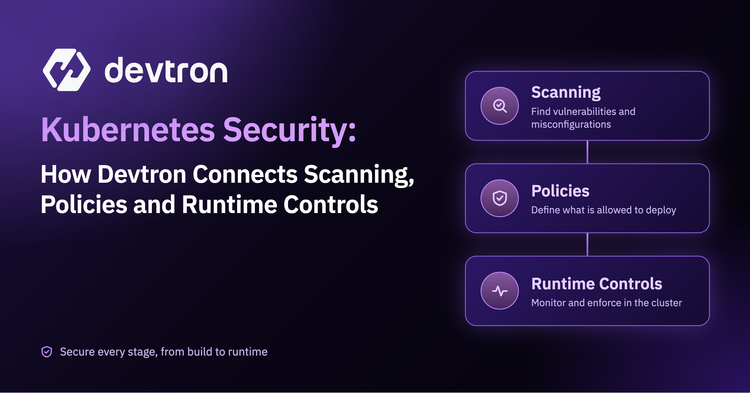
Kubernetes workloads face security risks at every stage, from vulnerable dependencies and container images to misconfigurations and unexpected runtime behavior. See how to build a layered security workflow with Devtron, policy engines, and runtime security tools.
Kubernetes
CI/CD should make releases predictable not turn every deployment into a major incident. Discover the practices that keep Kubernetes delivery secure, controlled, and reliable.
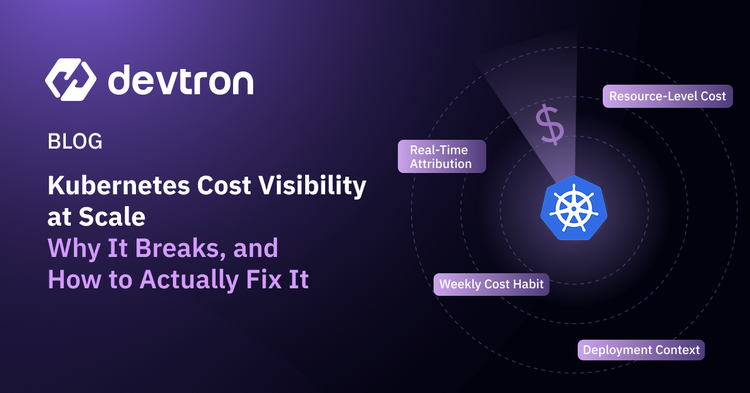
Cost visibility breaks the moment your clusters do. Here's why it happens and deep dive to trace every dollar back to the deployment that spent it with devtron.
Seven hard-won lessons from building Devtron, an open-source Kubernetes platform, on trust, composability, and unifying fragmented tooling.
Your Kubernetes cluster may run smoothly, but hidden inefficiencies can increase cloud costs. Learn how over-provisioned workloads, oversized non-production environments, forgotten infrastructure, and inefficient autoscaling create waste and how platform teams can eliminate it.
When GPUs enter your Kubernetes cluster, you’re no longer just running apps; you’re running an AI platform. Most teams aren’t ready for the scheduling, governance, and cost challenges that follow.
Traditional approaches using disparate monitoring, deployment, and security tools create dangerous blind spots. Unified platforms transform this chaos into predictable operations by consolidating upgrade compatibility checks, API deprecation scanning, and workload analysis into cohesive workflows.
Platform engineers spend 60% of their time on incident response, hunting through disconnected dashboards. Devtron consolidates Kubernetes operations into one unified view—showing what broke, why it happened, and how to fix it. No more context switching. Just faster resolutions and less firefighting.
Take your operations to the next level
Get started with Devtron, the perfect Kubernetes platform for your team
Get Devtron Demo Get a demo